I didn't find out until after I made this dish that it had such an interesting name (I thought it was just Dutch Potatoes), such a long history in traditional Dutch cuisine, or its own legend (and Wikipedia entry - see http://en.wikipedia.org/wiki/Hutspot)! To be honest I was just looking for a side dish involving carrots, not involving the word "glazed." According to legend, the recipe for this dish came from bits of cooked potato left behind by Spanish soldiers during their Siege of Leiden in 1574 during the Eighty Year's War. Supposedly the Dutch still celebrate Leidens Ontzet every year on October 3rd by eating Hutspot! Maybe some of our Dutch contributors and/or followers can confirm this?
Okay, enough suspense - here's the dish! As I had hoped, an easy, affordable, delicious way to incorporate carrots into your dinner.
Hutspot
1/2 chopped onion
2 tsp & 1 Tbsp butter
6 medium potatoes, peeled & cubed
4 medium carrots, peeled & sliced
1/4 cup sour cream
1/4 tsp salt
1/8 tsp pepper
Bring a pot of salted water to boil. Reduce heat, add the sliced carrots, cover and cook for 10 minutes. Add the cubed potatoes and continue cooking 10-15 minutes until both carrots and potatoes are tender. While the carrots and potatoes are cooking, saute the onions in 2 tsp butter until golden brown, about 8 minutes. Drain the carrots and potatoes and coarsely mash. Stir in sauteed onions, 1 Tbsp butter, sour cream, salt & pepper. Ready to serve!
March 16, 2011

March 2, 2011
Tower of Ivory, House of Orange. Part 1
 So many orange and green/blue items appeared in my kitchen/dining room lately, some of which you all recognize, recently. Not least of these are carrots, our next vegetable. Odd, because (as far as I can tell) the carrot is earliest derived from Iran in purple variation. Carrots have been found to inhabit various colors since this time, including white and the orange color with which it is most closely associated. Both the root and the leaves are edible, although there is some debate about eating the leaves, according to the World Carrot Museum.
 This useful site also describes the medical benefits of the carrot top, which was also once a fashionable item with ladies and their milliners. Incidentally, when carrots go to seed, they very much resemble the prairie flower Queen Anne’s lace, which is actually wild carrot (!)
An outcome of my new-found knowledge of carrot tops and their various edible qualities caused me to explore a recipe involving such greens (thanks again, World Carrot Museum.)
Pesto.
I admit that a major draw of this particular pesto (aside from the use of carrot tops) was the presence of hazelnuts. Toasted. Hazelnuts. Although the carrot tops tasted like grass (not that I’ve been eating much grass lately), the hazelnuts carried the pesto. Throw in some lemon juice, fresh parsley, olive oil, garlic, and salt, and you’ve got yourself a tasty green mess, particularly if you do not own a food processor, and attempt a make-do with the “icy drinks” setting of your blender. Next time I’ll settle for the rough chop, which may be preferable with the hazelnuts.
 For the carrot roots I employed Jamie Oliver’s recipe (one of three) for carrots, which involves boiling large pieces of carrot in water with wedges of orange (I substituted tangelos), whole garlic cloves, herbs, butter, and sugar (I substituted urban honey, thanks to Nichole and Sarah.) When the carrots are tender, drain the liquid, reserving one citrus wedge and the garlic cloves. Chop the citrus, garlic, and carrot together (I sort-of mashed them for textural purposes), return to the stove and stir in more butter, some cumin, salt and pepper.
Another recipe I’ve tried was a spicy carrot salad from Smitten Kitchen.
In all honesty, I have not thought much about carrots in and of themselves until recently. I have now developed a heightened awareness, as well as a sensitivity the power of cumin and citrus to transform the lowly carrot.
Another interesting diversion to the Story of the Carrot involves the The House of Orange, the regal entity of Holland during the sixteenth and seventeenth centuries. I assume that our readership is cognizant of the broad outline of this period of time, in which the Reformation occurred. I think we’re all apprised of the bad (iconoclasm, violence) and good (church reforms) occurred during this time. Well, the House of Orange got pretty involved in a nasty altercation with Spain to allow more religious diversity (and a few other, umn, mercurial ventures), as well as Dutch Independence. They also ate a lot of carrots, which they prized for their coloring.
Should you be interested in learning more about the eighty years’ war, here’s a link to what may be the longest wikipedia entry currently on file. Ladies, please correct this problem.
Stay tuned for Part 2, in which I will commemorate the Beeldenstorm with some provocative and distracting root-centric art.
January 9, 2011
Bringing Back the B.S.
 If you don’t like Brussels Sprouts, you’re just not cool. There. I said it. There are approximately 500,000 (I was going to write "a million," but decided to tone down my exaggeration)amazing recipes for Brussels Sprouts posted on foodie blogs all over the internets. And you don’t have to take my word for it. This salad looks amazing.
 All of the hype could almost cause me to deny my interest and appetite for b.s. I will be honest, though, and admit to being even more enamored with the sprout when I saw it being touted for all its worth. And I will also admit to putting my money where my mouth is, purchasing Brussels sprouts by the stalk; in my CSA box, at Whole Foods, and even at Trader Joe’s.
One of the worst/best things about Brussels Sprouts becoming cool with our generation is that they have always been cool with our parents, and our grandparents. Very few other items can bring your family together at the holidays (short list of others: booze, cookies, gifts of cash, and in some cases, Motown.) For example, at Christmas dinner, my amazingly cool brother-in-law braised b.s. and Grandma had a second helping. I asked my Dad about the b.s. “I love ‘em,” he responded. As it happens, the first meal my father prepared for my mother included Brussels Sprouts, and they grew them in their first vegetable garden (!)
So not only is it uncool to not like b.s. It’s also inauthentic. Some things are just good.*
Personally, my favorite recipe for Brussels Sprouts is a good old fashioned roast, perhaps with some toasted nuts and a maple-dijon glaze. So easy.
Did I mention that I also made a collage? I dedicate this one to Katy, Ryan, and their new little sprout. Actually, it’s a belated gift. So, surprise, Katy! I hope you like Brussels Sprouts. If you don’t…
*Disclaimer: As we are all entitled to our various tastes, I maintain that IF you have eaten Brussels sprouts that are well-prepared, and IF you still do not enjoy them, you might yet be considered cool in some circles, depending on a few other factors, which I am probably not cool enough to be aware of.
December 13, 2010
Squarsh.
Had to share this photo. I only recently discovered Carnival Squash. And I think they are my new favorite. It's just the cutest squash I've ever seen. The love child of Acorn and Delicata is apt, Laura.

One more thing about winter squarshes: I have always scooped out the seeds of a squash-half BEFORE roasting... until now! Our friend, Kai, enlightened me last Friday to the wisdom of the seeds-in-squash roasting technique. Laying the squash on the buttered tray with the seeds snugly nestled in place by all those stringy fibers (which are not that easy to scrape out when raw, I find) helps to keep the moisture in the vegetable as it cooks. Afterward, gently scooping out the seeds, it's like butter.

One more thing about winter squarshes: I have always scooped out the seeds of a squash-half BEFORE roasting... until now! Our friend, Kai, enlightened me last Friday to the wisdom of the seeds-in-squash roasting technique. Laying the squash on the buttered tray with the seeds snugly nestled in place by all those stringy fibers (which are not that easy to scrape out when raw, I find) helps to keep the moisture in the vegetable as it cooks. Afterward, gently scooping out the seeds, it's like butter.
December 7, 2010
Brussels Sprouts : Everyone’s (New) Favorite
 I have been surprised how prevalent Brussels sprouts are in this new era, and how popular they are among our friends. Maria and her boyfriend Kyler seem to be eating them and buying them all of the time. I have served them a number of times when we’ve had guests this fall, and they always seem happy to eat them. These little cabbage-like things seem to have a constant spot in our refrigerator’s vegetable drawer. This is surprising; as a child, I loathed them and avoided them at all costs. But as an adult, I have found them to be quite pleasant, to the mouth and to the eye.
For a thanksgiving gathering I attended, I was asked to bring a vegetable dish, so naturally, I roasted some carrots and Brussels sprouts. I was pleased to find the sprouts for sale still on the stalk, which is always a sight to behold. Upon arrival at the gathering, someone excitedly exclaimed, “Elizabeth, did you bring Brussels sprouts?” And once again, I found myself slightly dumbfounded at the excitement around Brussel sprouts.
Roasting these vegetables is the way to go; it really brings out the flavor. Ina Garten, author of the Barefoot Contessa cookbooks, is the one who taught me to roast these veggies. Here is her recipe:
* 1 1/2 pounds Brussels sprouts
* 3 tablespoons good olive oil
* 3/4 teaspoon kosher salt
* 1/2 teaspoon freshly ground black pepper
Preheat oven to 400 degrees F.
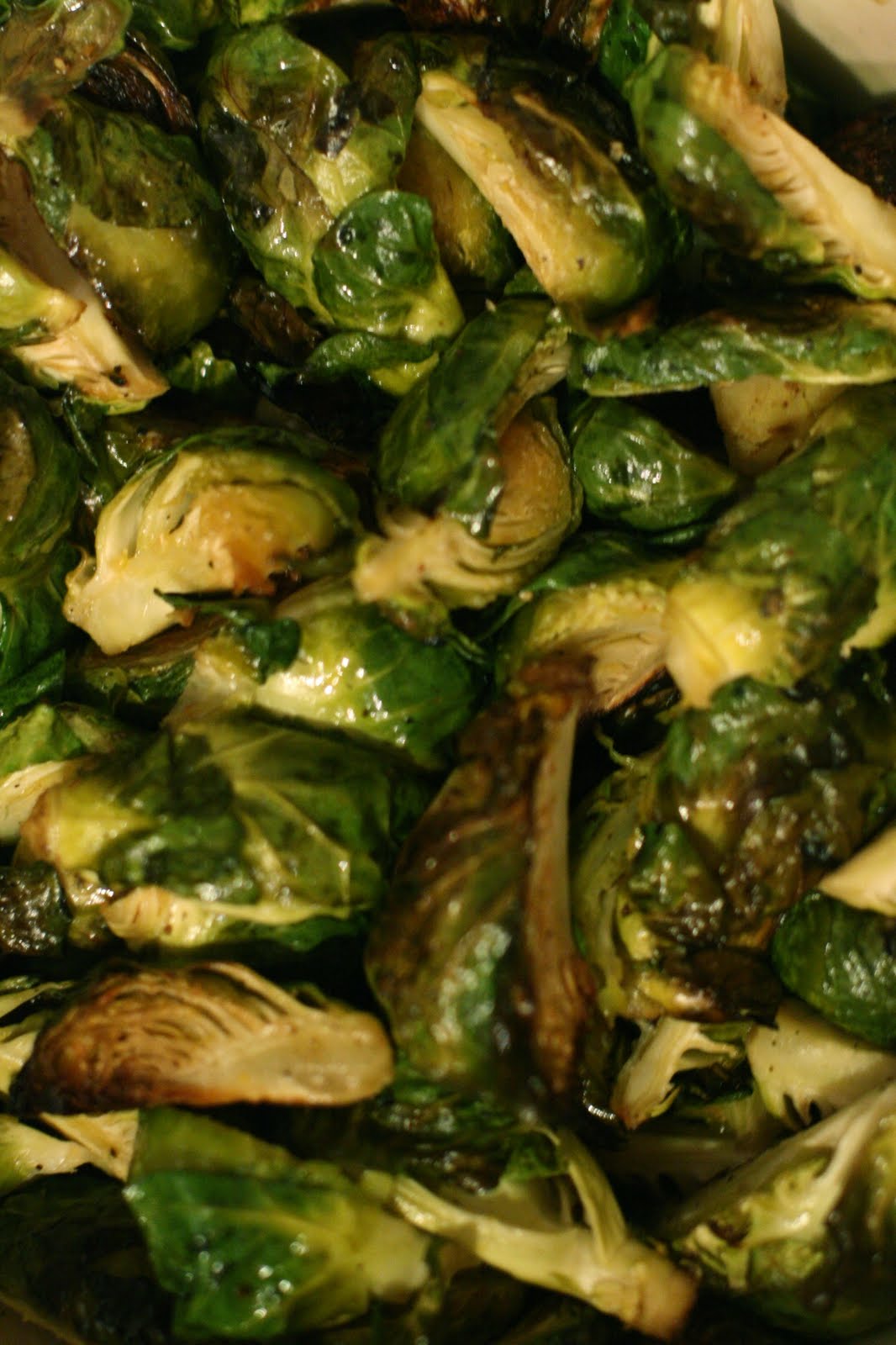
Cut off the brown ends of the Brussels sprouts and pull off any yellow outer leaves. Mix them in a bowl with the olive oil, salt and pepper. Pour them on a sheet pan and roast for 35 to 40 minutes, until crisp on the outside and tender on the inside. Shake the pan from time to time to brown the sprouts evenly. Sprinkle with more kosher salt, and serve immediately.
As you can see from my photo, I chose to cut the sprouts into quarters to speed up the roasting process.
December 5, 2010
The Other Squash
 For anyone who wondered about the alien-looking squash in the bottom corner, I can't say with certainty what it is. I think it was either a "Dumpling," aka "Sweet Dumpling," or a "Carnival." Sweet dumplings look like the love-child of a small pumpkin and a delicata. The Carnival looks like the love-child of an acorn squash and a delicata. You can see how a person could confuse the two. Judging from the shape, I think the squash in the painting is most probably a carnival.
I did eat several of each this fall. The flavor of the sweet sumpling is actually quite similar to delicata. And, also like delicata, you can eat the skins! Why is this so exciting?! It feels good to eat the whole thing, you know?
What did I cook with this squash? I am a simple cook, so I sliced it in halves, face down (estimated 30 minutes) and then sprinkled a few toasted pecans, raisins or currants, and either blue cheese or gorgonzola crumbles, parmesan shavings, or (once) some melting brie. Half of a squash with such fillings makes a great little work-lunch. I also love this squash plain, with butter and salt. This Fanatic Cook roasted a sweet dumpling quash whole and ate it in slices. Fanatical!
Here's a good short list of other varieties of winter squash at What's Cooking America. I am interested in the Hubbard Squash.
December 1, 2010
New era + vegetables.
This last season of my life has been markedly different from previous seasons, for a few reasons. I am now a homeowner. I currently have the blessing of living with my sister (Maria). And I have been dating someone (Adam) for four months.
With these new (very good!) elements of my life has come a new routine. And vegetables and cooking seem to have a nice place in this routine…veggies are part of the daily stuff of life, and I love sharing them with the people around me. Maria and I both like to cook, and we have been enjoying the new kitchen very much. Adam (who has a distinct love for vegetables!) had quite an impressive garden in his backyard this summer, which means that I ate more green things, notably a lot of excellent kale.
Well, let us focus on tomatoes. (I would have blogged about squash, but alas, I am still a little intimidated….Katie and Laura’s posts, have, however, inspired me!) First, here is a photo of Maria in our new kitchen chopping some tomatoes from a friend’s garden. Delicious.


And here is the entire crop of tomatoes from Adam’s garden, in his hands. His kale was much more plentiful, but we were still able to enjoy his tomato harvest, a nice addition to a salad.

So, to conclude, I am grateful for tomatoes, for new surroundings, for the people in my life. And for my dear vegetable-blog friends. Here is a shot of tomatoes from Katy and Ryan’s greenhouse; such fond memories of the Liberal End Summit!

With these new (very good!) elements of my life has come a new routine. And vegetables and cooking seem to have a nice place in this routine…veggies are part of the daily stuff of life, and I love sharing them with the people around me. Maria and I both like to cook, and we have been enjoying the new kitchen very much. Adam (who has a distinct love for vegetables!) had quite an impressive garden in his backyard this summer, which means that I ate more green things, notably a lot of excellent kale.
Well, let us focus on tomatoes. (I would have blogged about squash, but alas, I am still a little intimidated….Katie and Laura’s posts, have, however, inspired me!) First, here is a photo of Maria in our new kitchen chopping some tomatoes from a friend’s garden. Delicious.


And here is the entire crop of tomatoes from Adam’s garden, in his hands. His kale was much more plentiful, but we were still able to enjoy his tomato harvest, a nice addition to a salad.

So, to conclude, I am grateful for tomatoes, for new surroundings, for the people in my life. And for my dear vegetable-blog friends. Here is a shot of tomatoes from Katy and Ryan’s greenhouse; such fond memories of the Liberal End Summit!

November 30, 2010
Two Vegetables. One Blogger Post.
One day this fall my husband came home with a box full of garlic and green tomatoes grown in the community garden at his graduate school. Busy, and daunted by the task  of figuring out what to do with green tomatoes, I left them in the box on the counter. Coming home from work the next day I discovered the most lovely monochromatic arrangement of those very same tomatoes and garlic, nestled among two acorn squash.
It wasn't until later, when to my surprise the tomatoes began to ripen in their bowl, that I got around to painting his lusciously composed still life. And I couldn't help snacking on a few of those bright yellow tart tomatoes as I went along! This unexpected pairing of end-of-summer tomatoes with winter squash sure helped me out when it came to blog posts as well - seeing as I didn't get a tomato post up for its chosen month. (Thank you for providing the inspiration, Love.)
If you ask me, a winter squash, roasted simply, with a generous pat of butter is perfect just the way it is. The delicata we got at the last farmer's market of the season from Bruce, of Abenaki Springs Farm, was a stand-alone for me. My girls need a little more enticing when it comes to squash, however. Thus, I give you a recipe - of my very own!
Maple Cream Cheese Delicata Canoes
Roast the delicata on a buttered pan at 35o until fork-tender. While these bake place a cup or so of cream cheese in a small bowl. Whisk in a couple tablespoons of pure maple syrup to taste, and just a touch of milk to achieve a creamy consistency. When the squash are ready, sprinkle them with sea salt and spoon the maple cream cheese mixture into the boats.
(An aside: I don't like recipes that have the word "boat" in them. Categorically. I scan right across those recipes and move on to something else. So, yes, I'm hedging around that with "canoes," but after slicing the squash lengthwise and scooping out the seeds there's really no denying their nautical look - and probable seaworthiness.)
 While I'm sneaking back to tomatoes this month, here are some photos from our Vegetable of the Month Club Summit in July. These were taken in Ryan and Katy's bountiful greenhouse.

A heavy branch of large green tomatoes broke and fell. We mustered the gumption to slice and fry them up (Laura has a hot oil burn scar to prove it.) They were delicious. Does anyone still have that recipe to post?
There was so much life in the greenhouse - floor to ceiling wonders - like these young okra and marvelous tomatillos.
The scent of tomatoes on the vine is one of my most favorite smells in the whole wide world.
 of figuring out what to do with green tomatoes, I left them in the box on the counter. Coming home from work the next day I discovered the most lovely monochromatic arrangement of those very same tomatoes and garlic, nestled among two acorn squash.
It wasn't until later, when to my surprise the tomatoes began to ripen in their bowl, that I got around to painting his lusciously composed still life. And I couldn't help snacking on a few of those bright yellow tart tomatoes as I went along! This unexpected pairing of end-of-summer tomatoes with winter squash sure helped me out when it came to blog posts as well - seeing as I didn't get a tomato post up for its chosen month. (Thank you for providing the inspiration, Love.)
If you ask me, a winter squash, roasted simply, with a generous pat of butter is perfect just the way it is. The delicata we got at the last farmer's market of the season from Bruce, of Abenaki Springs Farm, was a stand-alone for me. My girls need a little more enticing when it comes to squash, however. Thus, I give you a recipe - of my very own!
Maple Cream Cheese Delicata Canoes
Roast the delicata on a buttered pan at 35o until fork-tender. While these bake place a cup or so of cream cheese in a small bowl. Whisk in a couple tablespoons of pure maple syrup to taste, and just a touch of milk to achieve a creamy consistency. When the squash are ready, sprinkle them with sea salt and spoon the maple cream cheese mixture into the boats.
(An aside: I don't like recipes that have the word "boat" in them. Categorically. I scan right across those recipes and move on to something else. So, yes, I'm hedging around that with "canoes," but after slicing the squash lengthwise and scooping out the seeds there's really no denying their nautical look - and probable seaworthiness.)
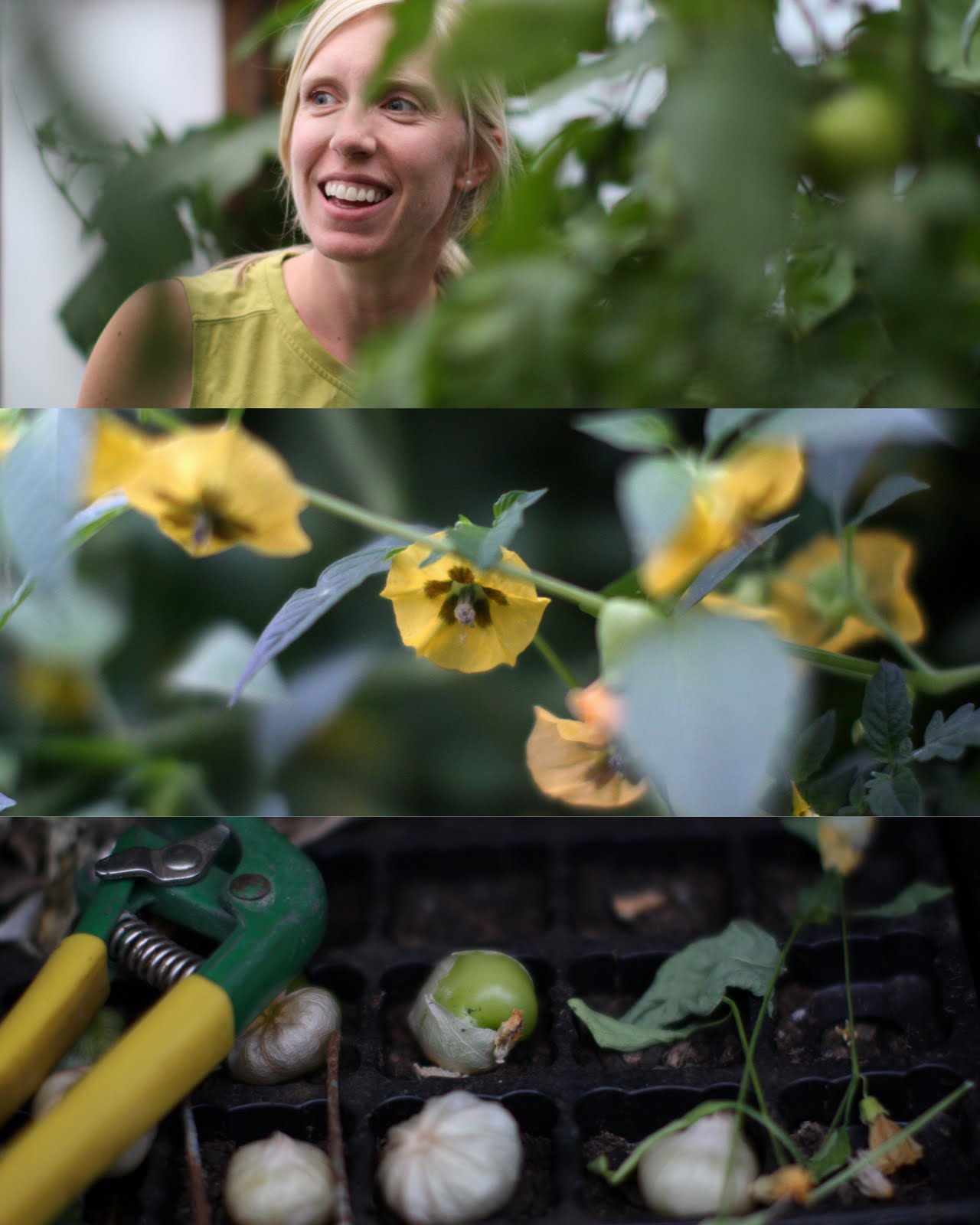 While I'm sneaking back to tomatoes this month, here are some photos from our Vegetable of the Month Club Summit in July. These were taken in Ryan and Katy's bountiful greenhouse.
A heavy branch of large green tomatoes broke and fell. We mustered the gumption to slice and fry them up (Laura has a hot oil burn scar to prove it.) They were delicious. Does anyone still have that recipe to post?
There was so much life in the greenhouse - floor to ceiling wonders - like these young okra and marvelous tomatillos.
The scent of tomatoes on the vine is one of my most favorite smells in the whole wide world.
November 26, 2010
So Much Squash

It's late November and I've eaten more squash in the past 3 months than I thought possible. As you can see, I am not discrimating, and I represented all of these squashes in the above paining. However, after careful consideration I have determined my favorite: delicata. Delicata squash is small and tubular, with green stripes down the sides that turn orange as it ripens. It bakes quickly and has a very soft and, well delicate, texture. The flavor is nutty and sweeter than acorn or dumpling squash. You can eat the rinds! AND save and toast your seeds! For an easy addition to salads, or as a side in its own right, cut the squash in rings, scooping out the seeds, coat with olive oil, a pinch of salt, pepper and--possibly-thyme and bake at 400 degrees Fahrenheit for 25-30 minutes.

My favorite use for this squash was in a warm layered salad of roasted beet slices, matchsticks of kohlrabi, lemon balm sprigs, and parmesan shavings. Did I add walnuts or pomegranate seeds? I can't remember, but I should have. A simple lemon juice and oil dressing. Everyone's a food blogger these days, so I won't even try to bring you high quality food photos. Use your imagination--
I also wanted to comment on seeds. You can easily toast seeds from many varieties of squash (not just pumpkin.) Soak your seeds in salt-water overnight, then let them dry and toast them on a greased baking sheet.
I've been thinking a lot about seeds lately. I could try to collect my thoughts. Maybe an essay would result? Probably not. Here is a detail of a recent paining of some Butternut Squash Seeds on my old veneer table:

November 20, 2010
Squash for Breakfast
It's squash month for the vegetable of the month club! Each of us decided to experiment with a different squash this month. My pick: butternut.
Squash-Spice Muffins
(I was going to add "healthy" to the name but then you might not try them - but seriously, they are very healthy :))
1 1/2 cups flour (plus 1 T extra for high altitude)
1 1/2 tsp cinnamon
1 1/2 tsp ground ginger
1/4 tsp nutmeg
1/4 tsp ground cloves
1 tsp baking soda
1/4 tsp salt
1/2 cup dark brown sugar
1 cup butternut squash puree (see below)
3 Tbsp canola oil
1/3 cup plain yogurt (1/2 cup for high altitude - you can use fat-free if you like)
3 Tbsp molasses
1 large egg
For puree: Halve an unpeeled squash lengthwise and scoop out the seeds & membrane. Place the halved squash cut-side down in a baking pan filled three-quarters full with water. Roast at 400 degrees F until squash is completely fork-tender. Let cool, scoop out flesh and mash it with a potato masher or puree with an electric mixer. Freezes well!
Preheat oven to 350 degrees F. Coat 12 muffin holes with cooking spray or use cupcake liners. In a large bowl, whisk together flour, cinnamon, ginger, nutmeg, cloves, baking soda and salt. In another bowl, combine sugar, squash puree, oil, yogurt, molasses and egg. With an electric mixer on medium speed, mix for 1 to 2 minutes (or mix by hand). Make a well in center of dry ingredients; pour in liquid mixture and gently fold to just combine (batter will be lumpy).
Evenly pour batter into muffin pan about two-thirds full. Bake until a toothpick inserted in center of a muffin comes out clean, about 20 to 25 minutes. Makes 12 muffins.
Butternut squash soup recipe coming soon...
October 7, 2010
When your tomatoes are not red--

We are at the tail end of tomato season, which means that you are most likely harvesting green tomatoes. I've had my run-in with a frying pan and a green tomato this year. Last week I despaired of not having the time to recreate the recipe (simple yet time-intensive) and opted for a green tomato salsa. It's an easy and quick recipe that will use up your green tomatoes, as well as any extra hot peppers and cilantro. A basic salsa recipe includes:
1. Tomatoes
2. Garlic
3. Onions, minced
4. Lime Juice
5. Salt (Kosher or Sea Salt)
6. Hot Peppers/Bell Peppers
7. Olive oil
8. Cilantro (optional)
You could add other items, of course (black beans, corn.) Personally, I like to use what I have available, for the economy of the thing. I don't have a good picture to share. I think we all know what salsa looks like.
I really enjoyed the green tomatoes, and I also had a good experience with a yellow tomato,which I attempted to paint, and then eventually ate in slices. I posted the painting on my fridge. See above photo. I also painted a hot pepper, just for the fun of it.The tomato was sweet and subtle, not quite as tart as a red variety. The pepper was so spicy that it burned my hands!

Should you be interested in the health benefits of yellow and green vs. red tomatoes. A quick search reveals a helpful Q & A from the New York Times, written by C. Claiborn Ray. A little dated (2000), but still informative:
Q. I see yellow tomatoes, among other exotic types, at vegetable stores. Do they differ in nutritional value from red tomatoes?
A. Like all vegetables, tomatoes differ somewhat in nutritional value from variety to variety, and even from season to season. For example, the United States Department of Agriculture lists different average nutrient contents for tomatoes harvested from November to May and for those from June to October.
Many food values are comparable for red and yellow tomatoes, or are a tradeoff. For example, the amino acids are found in similar smidgens. The precursor of vitamin A called beta carotene is found in valuable amounts in red and yellow tomatoes and in many other vegetables.
Both colors have vitamin C, though a red tomato has about three times as much. Minerals are similar, though a yellow tomato is higher in sodium. Yellow tomatoes have more niacin and folate; red tomatoes have more vitamin B6 and pantothenic acid, and so on.
But there is one significant nutrient, reported in some studies to be a powerful antioxidant that may help prevent cancer, that is found in red tomatoes but not in others: lycopene. Lycopene, which is also converted in the body to vitamin A, is the very thing that makes red tomatoes red. The redder the tomato, the more lycopene, and no lycopene at all is to be found in green or yellow tomatoes.
August 8, 2010
Vegetables Unite

So many vegetables, so little time. We've all seemingly taken a break from blogging. Occasionally we need to focus on our day jobs, attend our inlaws' weddings, vacation, move across the country, purchase our first home, or just unplug our computers and enjoy the summer in general. Anyway, I thought to give an update on the progress of The Vegetable of the Month Club contributors, on and off-line.
The big news is that all six of us VOTM clubbers convened in Evergreen, Colorado this week for the Vegetable of the Month Club Annual Summit (aka The Liberal End 2010 Reunion.) Almost every meal included some form of produce harvested from our hosts' (the Rogers) greenhouse. Our collaborative efforts produced pizzas (one includes the ubiquitous swiss chard), salads, breakfast burritos, a zucchini-shrimp-goat cheese risotto, and fried green tomatoes. We didn't get to the stuffed zucchini blossoms, I'm afraid. We went hiking instead.
Thanks to Katy and Ryan for their well-tended green-house and gracious hosting, Kate and Emily for some careful and creative menu-planning, Annie for the exuberant harvesting, and Elizabeth for the photos and support. And thanks to me for eating my fair share and taking a fried green tomato grease burn for the team. Totally worth it and healing nicely.
On a personal note, I have to say that the over-abundance of produce in my refrigerator (due to my rather large CSA share) has lead me to explore new recipes, but it has also been a little stressful. July was one of the busiest months yet at work. I've also been rethinking my living situation, not least of all due to the small and out-dated kitchen in my current apartment. I just have too many vegetables, and I hate to waste them.
I also feel that I do not have the time necessary to cook well and often. As an aside, I think that the solution to my predicament might be some good, old-fashioned canning, which would allow me to savor the bounty while indulging my great love of pickles and mountain-bred hoarding tendencies. If anyone with similar interests (or perhaps greater skill levels) would like to join me, I welcome your good company and expertise.
Nevertheless, I've managed to enjoy my vegetables. I have: labored over a cabbage and beet salad with honey and orange vinaigrette; casually thrown together farm fresh cucumbers and onions; and become acquainted with garlic scapes. Add kale chips and a basil cheesecake to the list.
Oh, and here's an easy, every-day dish: wilted greens (chard, beet greens, etc) in garlic, crushed red pepper, onions and tamari on a bed of quinoa, topped with roasted peanuts. This dish is my go-to, post-swim dinner. It's partially inspired by my new cookbook, "The Real Dirt on Vegetables," and very loosely inspired by the Miso Marinated Tofu at the newly opened Ruxbin Kitchen. I don't think I need to add to the rave reviews of this restaurant, which was featured in the Chicago Reader just this week, but will again thank Nate for the introduction.
I do believe that we will be sharing some of our creations from The Liberal End 2010 Reunion (aka The Vegetable of the Month Club Annual Summit) soon.
Hold tight, people.
July 8, 2010
Swisschardzel
It makes sense that food features strongly in many stories, little else is so important to human survival. Yet no vegetable was so confounding to me as a child as that in the opening to the story Rapunzel. How could someone long for a bunch of leaves so desperately they'd end up trading their baby to an enchantress?
Then one day I was pregnant, and to my surprise craving leafy greens. Particularly Swiss Chard. (I've never tasted Rampion a.k.a. ramps - the fateful vegetable Mama Rapunzel pined for, and from which The Witch derived the child's name before locking her in a tower for life. Can anyone vouch for their crave-worthiness?) While acknowledging that I finally relate to her longing for leaves, I'd like to state that the comparison ends there. For the record: I did not cause my husband to trespass, steal vegetables from a sorceress' garden, or face the choice of choosing between his own life and that of our unborn baby so that I could eat some greens. And as pretty as Swiss Chard is, I opted not to name our baby after it.

I did, however, ask Jake to partake in many meals involving Swiss Chard. More than just hunger, for me greens satisfy almost soul-deep. And as such, I tend to like them done simply. One of my favorites is to boil the chopped chard in salted water with plenty of lemon juice. A great side dish, but if left up to me I'd consider it dinner. (Full elaboration on the recipe can be found in Deborah Madison's Vegetarian Cooking for Everyone, a cookbook I highly recommend.)
Even though I do SO love Swiss Chard, I still have not found time to finish my watercolor. (Anyone else noticing a theme here - A Defense of Things NOT Done...? hmn...) Brava Laura for posting your unfinished work! I am not brave enough to do so.
But may I present to you a photograph of the lovely, the brilliant and earthy... Ruby Red Chard!
 This bunch is growing under the tender care of Aunt Sue's green thumb. And no matter how badly your pregnant wife pines for it, don't steal from her garden - she'll gladly share.
Then one day I was pregnant, and to my surprise craving leafy greens. Particularly Swiss Chard. (I've never tasted Rampion a.k.a. ramps - the fateful vegetable Mama Rapunzel pined for, and from which The Witch derived the child's name before locking her in a tower for life. Can anyone vouch for their crave-worthiness?) While acknowledging that I finally relate to her longing for leaves, I'd like to state that the comparison ends there. For the record: I did not cause my husband to trespass, steal vegetables from a sorceress' garden, or face the choice of choosing between his own life and that of our unborn baby so that I could eat some greens. And as pretty as Swiss Chard is, I opted not to name our baby after it.

I did, however, ask Jake to partake in many meals involving Swiss Chard. More than just hunger, for me greens satisfy almost soul-deep. And as such, I tend to like them done simply. One of my favorites is to boil the chopped chard in salted water with plenty of lemon juice. A great side dish, but if left up to me I'd consider it dinner. (Full elaboration on the recipe can be found in Deborah Madison's Vegetarian Cooking for Everyone, a cookbook I highly recommend.)
Even though I do SO love Swiss Chard, I still have not found time to finish my watercolor. (Anyone else noticing a theme here - A Defense of Things NOT Done...? hmn...) Brava Laura for posting your unfinished work! I am not brave enough to do so.
But may I present to you a photograph of the lovely, the brilliant and earthy... Ruby Red Chard!
 This bunch is growing under the tender care of Aunt Sue's green thumb. And no matter how badly your pregnant wife pines for it, don't steal from her garden - she'll gladly share.
June 28, 2010
Chard. Work. In progress.

Today I received a new cook book in the mail. I didn't even order it! As a new CSA shareholder, I have been gifted a seasonal recipe collection. Thank you, Farmer John. And thank you, generous employer! I hope that you meant to send me this book, because I don't think I'll give it back. Beyond having inventive recipes for all sorts of early season greens, I now possess a bound paper repository of veritable, vegetable facts.
My new cookbook taught me that one should only heat Goosefoot greens in stainless steel, as they will discolor in aluminum or iron. Also, you should really cut out the stems of larger leaves, slice them in 1/4" thick, and begin cooking before you add the greens, which, incidentally, you should slice to 1" wide on the diagonal. I am now more aware of spices that work well with Chard: marjoram, parsley, lovage, nutmeg, allspice, or paprika. I can only vouch for nutmeg and parsley, having a general dirth of lovage in my household. Ahem.
I must reiterate the connection between beets and chard. They are two varieties of Beta Vulgaris, and members of the Goosefoot family, who did not, to my knowledge, appear in any sitcoms in the nineteen eighties. Actually, Beets and Swiss Chard are so similar that we could not tell a beet that had been allowed to flower from chard in a brief walk around the AOLC garden today. Other Goosefoots: Spinach (no surprise there), Tetragonia, and Quinoa. Well, who doesn't have a very distant South American staple cousin?
Also, I made a little painting. It isn't quite done, so maybe I should have kept it to myself. But I'm having a good time, so why shouldn't you? Along with chard, this piece shows off the shoelaces from my old (and favorite) sneakers: the turquoise converse size 5 purchased at a Greek town thrift-store at the near beginning of my endless summer of post-college life. As you can see, they have been lovingly knotted, broken, and re-knotted. Another funny detail: I found it the wooden base at my former employer's warehouse sale, before I ever worked for them, or even thought I would. Walk circumspectly, as some say. What a long, strange trip it's been.
I will supposedly be receiving baby chard in my box tomorrow. Will we ever make it to the next vegetable, I wonder?
June 1, 2010
Rainbow Swiss Chard. Wow.

Rainbow Swiss chard is the free-loving, peace-making Alpine hitch-hiker of leafy greens. It's also loaded with acid. Oxalic Acid. And like a well-worn tie-dyed t-shirt, Rainbow Swiss Chard has traveled across cultures, mixing with everything and nothing along the way. The French cook chard with leeks and and cream in tarts, while more Mediterranean cooks add feta, raisins, and pine nuts. Not as tough as Kale (and certainly no match for the hard-scrabble Cabbage), anyone can see that Swiss Chard is related to the more mainstream beet. Yeah man, the beet. Remember the beet? The descriptor "Swiss" makes certain that we will never confuse this leaf with the more delicate and refined French Spinach.

I made an appetizer, and I took it to a gathering, but I spilled it on the way. And I was really late. And then I sprained my ankle in a freak hugging accident. It was a spontaneous, Rainbow Swiss Chard kind-of night, I guess. But the Chard did well. I have to confess that I felt like I was using it; I'm almost positive that you could substitute beet greens, but that would feel too utilitarian. And I'm sure beet greens wouldn't have approved of my behavior. I mean, why would you date a banker when you could date a hitch-hiker? Yeah, I know it would be nice to have a root to roast later, the total package, etc. Did you know that beet juice has even been used to de-ice streets in the Rust Belt? And would you really want to eat Rainbow Swiss Chard every day for the rest of your life? I happen to know someone who affirms that she could be happy if she ate beets with such constancy.
Ah, well. Live and let live. Here is the recipe. I credit epicurious.
Garlic Toasts with Swiss Chard, Raisins, and Pine Nuts
2 tablespoons raisins (I used dried currants)
5 tablespoons extra-virgin olive oil
1 garlic clove, crushed to paste, plus 1 garlic clove, minced
20 1/2-inch-thick baguette rounds (from 1 baguette; why not keep some of the hippie vibe and use multi-grain?)
1 14- to 16-ounce bunch Swiss chard, thick stems trimmed
1/4 cup finely chopped onion (use a sweet onion, if you can)
2 tablespoons chopped seeded tomato
1 tablespoon chopped fresh parsley
2 tablespoons pine nuts
1/4 teaspoon ground nutmeg
Place raisins (or currants) in small bowl. Pour enough warm water over to cover; let stand 20 minutes. Drain.
Preheat oven to 350°F. Combine 3 tablespoons oil and crushed garlic in another small bowl. Arrange baguette rounds on baking sheet. Bake until bread is crisp but not brown, turning bread once, about 5 minutes per side. Cool. Brush bread with garlic oil.
Cook Swiss chard in large pot of boiling salted water until tender, stirring occasionally, about 10 minutes. (I would shorten this; I think my chard was a little too tender, maybe even mushy.) Drain well. Pat with paper towels to remove excess water. Finely chop chard. Heat remaining 2 tablespoons oil in heavy medium skillet over medium heat. Add onion and minced garlic and sauté until onion is tender, about 3 minutes. Add tomato and parsley and stir 1 minute. Increase heat to high; add pine nuts, nutmeg, raisins, and chard and stir 2 minutes. Season to taste with salt and pepper. Top toasts with Swiss chard mixture. Serve warm or at room temperature, whatever man.
I was pretty pleased with this recipe, which can party in any season. Just add good beer, someone else's house, and an open mind.

May 19, 2010
Fall in love with asparagus

I love asparagus. Asparagus. That is why I am sharing this romantical vegetable photo with you.
I have fond childhood memories of asparagus. My grandparents grew it in their garden! Everyone should experience the transformation this vegetable undergoes from small stalk to a tall and feathery weed-like grass. Any agrarian metaphors you might use to add meaning to your spiritual and emotional life will not break down with asparagus. Love grows.
And women in love never have to care about eating too much pastry dough. And that is why we will make a tart with our asparagus.
Asparagus and Mushroom Tarts (from Bon Appetit):
1 17.3-ounce package frozen puff pastry (2 sheets), thawed
1/4 cup (1/2 stick) unsalted butter
12 ounces fresh shiitake mushrooms, stemmed, caps cut into 1/4-inch-wide strips
1 teaspoon coarse kosher salt, divided
1/2 teaspoon coarsely ground black pepper, divided
1 pound slender asparagus spears, trimmed, cut on diagonal into 1-inch pieces
1 1/2 teaspoons chopped fresh thyme
1 1/2 teaspoons finely grated lemon peel
1/2 cup crème fraîche (if you're running two hours late for brunch, and the only store near you carries a great variety of greek yogurts, just use greek yogurt.)
1/2 cup (packed) coarsely grated Gruyère cheese (about 2 ounces)
Fresh thyme sprigs (for garnish)
Preparation
Roll out each pastry sheet on work surface to 10-inch square. Cut each into 4 squares. Using small knife, score 1/2-inch border (do not cut through pastry) around inside edges of each square. Arrange squares on 2 rimmed baking sheets. DO AHEAD Can be made 1 day ahead. Cover and chill.
Melt butter in heavy large skillet over medium-high heat. Add mushrooms; sprinkle with 1/4 teaspoon coarse salt and 1/4 teaspoon pepper. Sauté until tender and lightly browned, about 4 minutes. Transfer mushrooms to large bowl; cool 15 minutes. Add asparagus, chopped thyme, lemon peel, 3/4 teaspoon coarse salt, and 1/4 teaspoon pepper to mushrooms. Mix in crème fraîche and cheese. DO AHEAD Filling can be made 1 day ahead. Cover; chill.
(I strongly urge you all to plan your lives around this tart--and make the filling and roll out the dough ahead of time. Maybe you want to go jogging instead. Well, sometimes we make sacrifices for love.)
Position 1 rack in top third and 1 rack in bottom third of oven and preheat to 400°F. Mound filling atop pastry squares, leaving 1/2-inch plain border.
Bake tarts 12 minutes. Reverse sheets. Continue to bake tarts until crusts are puffed and golden and filling is cooked through, about 10 minutes longer. Transfer to plates; garnish with thyme sprigs.
Enjoy!
Love,
Asparagus
May 10, 2010
Celebrating Spring with Soup
Spring Celebration Soup
Here's another quick-and-easy recipe to celebrate the best spring veggies have to offer! It's also another testimony to the brilliance of lime/lemon juice used in conjunction with all kinds of vegetables. It's a great first course (last night it served as the first course to our main entree of grilled elk brats and greenhouse-fresh salad) - it can be casual or fancy! This recipe is adapted from Simply in Season.
Serves 4
4 cloves garlic, minced
1 cup green onions, chopped
2 cups carrots, thinly sliced
2 cups asparagus, chopped
4 cups chicken broth
1/3 cup lemon juice
1/2 tsp salt
1 cup fresh spinach, torn
1/4 cup fresh parsley, chopped
1/2 cup swiss or parmesan cheese, shredded

Here's another quick-and-easy recipe to celebrate the best spring veggies have to offer! It's also another testimony to the brilliance of lime/lemon juice used in conjunction with all kinds of vegetables. It's a great first course (last night it served as the first course to our main entree of grilled elk brats and greenhouse-fresh salad) - it can be casual or fancy! This recipe is adapted from Simply in Season.
Serves 4
4 cloves garlic, minced
1 cup green onions, chopped
2 cups carrots, thinly sliced
2 cups asparagus, chopped
4 cups chicken broth
1/3 cup lemon juice
1/2 tsp salt
1 cup fresh spinach, torn
1/4 cup fresh parsley, chopped
1/2 cup swiss or parmesan cheese, shredded
Heat 2 tbsp olive oil in a soup pot. Add garlic and saute until golden, about 1 minute. Add green onions and carrots and saute 5 minutes. Add asparagus, broth, lemon juice & salt and cook until asparagus is just barely tender (do not overcook). Stir in spinach and parsley and cook an additional 1 minute. Ladle into 4 bowls, garnish with swiss cheese, and celebrate spring!
May 8, 2010


May 6, 2010
A Pocketful of Asparagus
Once last Spring I was talking to Adriane (the same friend-and-fellow-vegetable-enthusiast who pointed me in the direction of February's Beet Tart). She was up in her garden and had just picked a "pocketful of asparagus." Doesn't that sound simply elegant?
 Growing up asparagus was a "special" food (Mom has many of these... "Don't just eat that! It's special.") It was an impressive side she served to guests - but also one of the few foods she would allow us to eat with our fingers. I'm intrigued by this vegetable that can be so fancy, and yet so at home wrapped casually in a bandana and peeking out of a pocket.
That tension was what drove this painting (and that cute vintage hankie I recently found.) Some new tubes of watercolor drove my overeager use of greens... Live and learn...

Sadly, I don't have a photo of this one to share, but my favorite asparagus dish this month was the simplest. Steamed and drizzled with:
Aunt Sue's Dressing for Vegetables
2-3 T. butter
1 T. Dijon mustard (I can't help myself - I use twice that!)
1 1/2 t. lemon juice
1/4 t. salt
1 t. sugar
Melt the butter and combine all ingredients. Serve over cooked vegetables.
We prepared it with my sister, Meg, when she was visiting - it is for special guests, after all - and ate it alongside some broiled salmon and potato pancakes. (Potatoes are a must when Meg is involved.)
Occasionally, I find good things come out of my lack of timeliness. For instance, Asparagus is the April Vegetable of the Month, but if I had posted in April I wouldn't have been able to share with you these photos of Adriane's Asparagus:2010 - growing in her garden this May!


 Growing up asparagus was a "special" food (Mom has many of these... "Don't just eat that! It's special.") It was an impressive side she served to guests - but also one of the few foods she would allow us to eat with our fingers. I'm intrigued by this vegetable that can be so fancy, and yet so at home wrapped casually in a bandana and peeking out of a pocket.
That tension was what drove this painting (and that cute vintage hankie I recently found.) Some new tubes of watercolor drove my overeager use of greens... Live and learn...

Sadly, I don't have a photo of this one to share, but my favorite asparagus dish this month was the simplest. Steamed and drizzled with:
Aunt Sue's Dressing for Vegetables
2-3 T. butter
1 T. Dijon mustard (I can't help myself - I use twice that!)
1 1/2 t. lemon juice
1/4 t. salt
1 t. sugar
Melt the butter and combine all ingredients. Serve over cooked vegetables.
We prepared it with my sister, Meg, when she was visiting - it is for special guests, after all - and ate it alongside some broiled salmon and potato pancakes. (Potatoes are a must when Meg is involved.)
Occasionally, I find good things come out of my lack of timeliness. For instance, Asparagus is the April Vegetable of the Month, but if I had posted in April I wouldn't have been able to share with you these photos of Adriane's Asparagus:2010 - growing in her garden this May!


April 23, 2010
Lunch
I had grand illusions of writing a complex and revelatory essay that would elevate the cabbage from its "humble" category in your minds, and place it firmly there instead as an indomitable character in the history of the human diet, and maybe even the human heart. However, the only notable references to cabbage my initial searches yielded weren't really about cabbage, they were about brains and foul smells and weight loss. The closest thing I came to a usable introductory quote are the words of Mark Twain ascertaining that "Cauliflower is nothing but cabbage with a college education." So you see, even Twain has nothing to say about cabbage, just cauliflower. Cabbage is probably just a humble vegetable after all. And though it's a reasonably good source of several vitamins, widely consumed around the world, and was popular in ancient Rome (burnt, it supposedly treats infections of all kinds?), I'm just much more interested in talking about lunch. People have eaten lunch for as long as I can remember, and it's also a reliable source of vitamins, and I haven't met a soul who doesn't like it. And it's humble. So, folks, today it's lunch I'll talk about.

I don't know about you, but I usually eat lunch alone. Judging by facebook statuses and tweets around the 12:30-1:30 hour, a lot of other people do too. They must not have anyone to tell about just how happy their noon-time meal made them. So they tell everyone. "Chipotle Burrito-Bowl", "Yep In-N-Out again!", etc. If we care enough about lunch to broadcast it, you'd think we'd make more time for it. I don't know what happened to my two-hour lunch break French upbringing and it's companion the three-course lunch, but ladies and gents, it's totally gone. And I miss it. This week I felt lucky to have rustled up a plate of sauteed cabbage with an egg, and gobbled it up between two blog-posts and an interior shoot. It was warm, a little sweet, and a little spicy (thanks to my brother -- he's at 0:36 -- who's been surreptitiously angling for me to add heat to my diet by gifting me things like yucatan sunshine), and a lot satisfying. Much more satisfying than working frantically on an empty stomach and looking up to see it's already four o'clock and I want a chocolate baked good, bad.
What do you say Vegetable of the Month Club, shall we do something about the eclipse of the lunch hour?

Cabbage Lunch in Kigali, Rwanda
I don't know about you, but I usually eat lunch alone. Judging by facebook statuses and tweets around the 12:30-1:30 hour, a lot of other people do too. They must not have anyone to tell about just how happy their noon-time meal made them. So they tell everyone. "Chipotle Burrito-Bowl", "Yep In-N-Out again!", etc. If we care enough about lunch to broadcast it, you'd think we'd make more time for it. I don't know what happened to my two-hour lunch break French upbringing and it's companion the three-course lunch, but ladies and gents, it's totally gone. And I miss it. This week I felt lucky to have rustled up a plate of sauteed cabbage with an egg, and gobbled it up between two blog-posts and an interior shoot. It was warm, a little sweet, and a little spicy (thanks to my brother -- he's at 0:36 -- who's been surreptitiously angling for me to add heat to my diet by gifting me things like yucatan sunshine), and a lot satisfying. Much more satisfying than working frantically on an empty stomach and looking up to see it's already four o'clock and I want a chocolate baked good, bad.
What do you say Vegetable of the Month Club, shall we do something about the eclipse of the lunch hour?
Subscribe to:
Posts (Atom)